
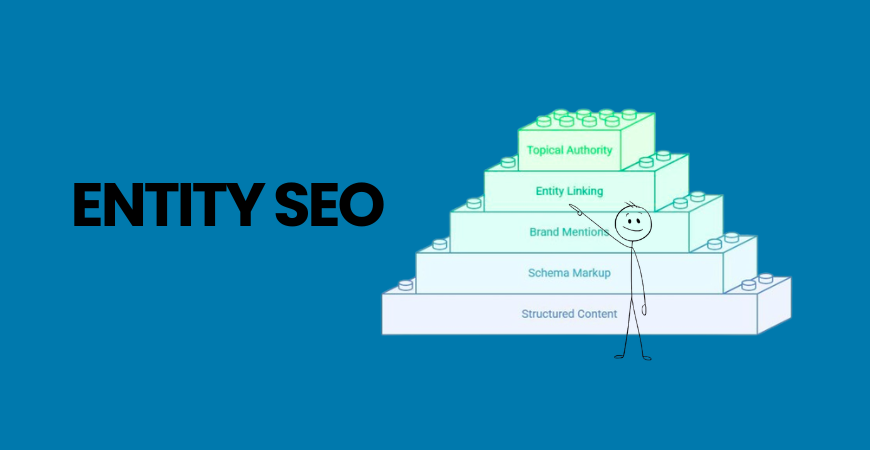
Introduction
Entity SEO is becoming one of the most important concepts in modern search optimization. While many marketers still focus heavily on keywords, Google’s understanding of content has evolved far beyond simple keyword matching. Today, search engines try to understand people, places, organizations, products, concepts, and the relationships between them. These are known as entities.
For years, SEO strategies revolved around placing keywords in titles, headings, and content. While keywords still matter, they no longer provide the complete picture. Google increasingly focuses on understanding the meaning behind content rather than simply counting words and phrases.
This shift has changed how websites earn visibility. Entity-based SEO helps search engines understand context, relationships, expertise, and topical relevance more accurately. As Google’s algorithms continue to evolve, understanding entities may become one of the most valuable skills for long-term SEO success.
What Is Entity SEO?
Entity SEO refers to the practice of optimizing content around identifiable concepts, people, places, brands, products, organizations, and ideas that search engines can recognize independently of specific keywords.
An entity is anything that is distinct, unique, and understandable on its own.
Examples of entities include:
- Kolkata
- Digital Marketing
- Artificial Intelligence
- Cristiano Ronaldo
- Search Engine Optimization
Unlike keywords, entities do not rely solely on exact wording.
For example, Google understands that:
- SEO
- Search Engine Optimization
refer to the same entity.
Similarly, Google understands that:
- Apple (Company)
- Apple (Fruit)
are completely different entities despite sharing the same word.
This ability to understand meaning rather than text alone is what makes Entity-based SEO so powerful.
Keywords vs Entities: The Evolution of Search
Traditional SEO focused heavily on keywords.
A marketer would identify a target keyword, optimize content around that phrase, and hope to rank higher.
Modern search works differently.
Google now attempts to understand:
- What the page is about
- Which entities are mentioned
- How those entities relate to one another
- Whether the content satisfies user expectations
Consider this example.
A page discussing:
- SEO
- Content Marketing
- Search Intent
- Internal Linking
- Technical SEO
sends strong signals about a broader SEO topic ecosystem.
Google can understand these relationships even when exact keywords are not repeated excessively.
This is one reason why semantic SEO strategy has become increasingly important. Search engines are moving away from isolated keyword matching and toward contextual understanding.
“Entity SEO is not about repeating keywords. It is about helping Google understand the relationships between people, places, brands, products, and concepts.”
How Google Uses Entities to Understand Content
When Google crawls a page, it does more than read words.
It tries to identify entities and their relationships.
For example, if an article discusses:
- SEO
- Ranking Systems
- Search Results
Google can connect these entities together and understand the broader context.
This allows search engines to answer questions such as:
- What is the primary topic?
- Which subjects are related?
- How authoritative is the content?
- Which pages discuss similar entities?
Entity recognition helps Google build a more complete understanding of content quality and relevance.
Instead of asking, “Does this page contain the keyword?”
Google increasingly asks:
“Does this page demonstrate understanding of the topic?”
That distinction is a major shift in modern SEO.
How Google Sees an SEO Article
To understand Entity SEO more clearly, imagine you publish an article about local SEO.
A human reader may simply see an article about ranking local businesses. Google, however, may identify multiple connected entities within that content, including:
- Google Business Profile
- Local Search
- Reviews
- Maps
- Citations
- Businesses
- Search Results
Google then evaluates how these entities relate to one another.
For example, it understands that Google Business Profile influences Local Search visibility, Reviews affect trust signals, and Maps help users discover nearby businesses. These relationships provide context that goes far beyond keyword matching.
The stronger and more natural these entity connections are, the easier it becomes for Google to understand the topic comprehensively.
The Role of Google’s Knowledge Graph
One of the strongest examples of Entity SEO is Google’s Knowledge Graph.
The Knowledge Graph is a massive database of entities and relationships.
It helps Google understand:
- People
- Brands
- Locations
- Events
- Products
- Organizations
For example, Google knows that:
- Sundar Pichai is the CEO of Google.
- Google owns YouTube.
- YouTube is a video-sharing platform.
These relationships help search engines interpret information more accurately.
When your content references well-connected entities naturally, Google gains additional context about the topic being discussed.
This is one reason why Entity-based SEO often produces stronger results than relying solely on keywords.
Why Entity SEO Matters More Than Ever
Search engines face a growing challenge.
The internet contains enormous amounts of content covering similar topics.
Keywords alone are no longer enough to differentiate content.
Entity-based SEO helps Google understand:
- Expertise
- Relevance
- Context
- Relationships
- Subject matter depth
As AI-generated content becomes more common, semantic understanding becomes even more important.
Many AI-generated articles target keywords effectively.
Fewer articles demonstrate meaningful understanding of related entities and topic relationships.
This creates opportunities for websites that focus on deeper contextual relevance.
Why Entity SEO Is the Missing Link Behind Modern Rankings
Many SEO strategies still focus heavily on keywords, backlinks, and technical optimization. While these factors remain important, they do not fully explain how modern search engines understand content.
Google increasingly evaluates the relationships between entities, topics, and concepts. Two websites may target the same keyword and have similar backlink profiles, yet one may outperform the other because it demonstrates stronger contextual understanding.
This is where Entity SEO becomes the missing link. It helps search engines connect topics, identify expertise, and understand how different concepts fit together. Instead of optimizing isolated pages, websites can build an interconnected topic ecosystem that aligns more closely with how Google processes information.
As search becomes increasingly semantic, Entity SEO helps bridge the gap between traditional optimization and modern search understanding.
Entity SEO and Semantic Search
Semantic search focuses on understanding meaning rather than exact wording.
Entity-based SEO plays a major role in this process.
For example, someone may search:
“Best ways to improve website visibility.”
Another person may search:
“How to rank higher on Google.”
The wording differs.
The intent is similar.
Google uses entities to connect these searches to related concepts such as:
- SEO
- Rankings
- Organic Traffic
- Search Visibility
This broader understanding allows Google to deliver more relevant results.
Entity-based SEO therefore, works closely with search intent because both focus on understanding meaning rather than simply matching phrases.
How Entity SEO Helps Build Authority
Entity-based SEO helps search engines understand how deeply a website covers a subject and how well different topics are connected. Instead of evaluating pages in isolation, Google looks at the broader relationship between content themes to assess expertise and authority.
For example, a digital marketing institute in Kolkata may publish content about SEO, Google Ads, social media marketing, content marketing, analytics, and AI tools. Individually, these topics attract different searches. Collectively, however, they create a strong network of related entities that helps search engines understand the institute’s expertise in digital marketing.
When these topics connect naturally, Google gains stronger evidence of expertise.
This contributes directly to topical authority because the website demonstrates knowledge across a complete subject ecosystem rather than isolated keywords.
The stronger the entity relationships across your content, the stronger your authority signals become.
Entity Relationships and Website Structure
Entity-based SEO works best when content relationships are clearly organized.
For example, SEO can be broken down into interconnected layers such as Technical SEO, Internal Linking, Entity SEO, Semantic SEO, and Search Intent, where each concept supports and expands the understanding of the others.
This structure helps search engines understand topical relationships.
A well-organized SEO site architecture reinforces entity connections and improves crawl efficiency.
Without structure, valuable entity relationships can become fragmented.
With structure, Google gains a clearer understanding of how topics support one another.
Why Entity SEO Improves Content Quality
Entity-based SEO naturally encourages more comprehensive content.
Instead of asking:
“How many times should I use a keyword?”
You begin asking:
“What concepts should be included to fully explain this topic?”
This approach often leads to:
- Better explanations
- Stronger context
- More useful content
- Higher user satisfaction
For example, an article about local SEO might naturally include entities such as:
- Google Business Profile
- Reviews
- Maps
- Citations
- Local Search
Covering these entities creates stronger topical relevance than repeating one keyword dozens of times.
This is why Entity-based SEO often supports better content optimization strategies.
Common Entity SEO Mistakes
Many websites unintentionally weaken their Entity-based SEO efforts.
Focusing Only on Keywords
Keywords remain important, but ignoring related entities limits contextual understanding.
Covering Topics Too Narrowly
Content that discusses only one aspect of a topic may miss important entity relationships.
Creating Duplicate Topic Pages
Publishing multiple pages targeting similar entities can create confusion and eventually lead to content cannibalization.
Ignoring Internal Links
Internal links help establish relationships between entities across your website.
Publishing Random Content
Unrelated topics make it harder for search engines to understand expertise and thematic consistency.
The Hidden Cost of Ignoring Entities
Many websites continue producing content based entirely on keyword research. While this approach may generate traffic in the short term, it often limits a page’s ability to demonstrate expertise and topical depth.
For example, a page targeting “SEO tips” may mention the keyword repeatedly but never discuss related entities such as search intent, content optimization, site architecture, rankings, or user experience.
As Google’s understanding becomes more sophisticated, pages that fail to establish these relationships may struggle to compete against content that provides stronger context and entity coverage.
How to Optimize Content for Entity-based SEO
Improving Entity-based SEO does not require advanced technical skills.
Several practical methods can make a significant difference.
Identify Core Entities
Start by identifying the primary entities related to your topic.
Cover Related Concepts
Discuss supporting entities that naturally belong within the subject area.
Build Context
Explain how entities relate to one another.
Use Internal Linking
Connect relevant content throughout your website.
For example, an article about Entity-based SEO may naturally connect to SEO content creation because content strategy influences how entities are presented and connected.
Create Topic Clusters
Group related articles around broader subject areas.
This helps reinforce entity relationships over time.
How to Check If Your Content Uses Entity SEO
Many content creators focus on keywords but overlook entity optimization. Before publishing a page, use this quick checklist:
Entity-based SEO Checklist
- Does the content mention important entities related to the topic?
- Does it explain relationships between those entities?
- Does it cover supporting concepts naturally?
- Does it avoid excessive keyword repetition?
- Does it connect related articles through internal linking?
- Does it demonstrate topical expertise and context?
If your content answers “yes” to most of these questions, you are already moving beyond traditional keyword optimization and closer to effective Entity-based SEO
Entity SEO and Information Gain
Entity-based SEO also supports originality.
The more relationships, examples, and contextual connections you provide, the more useful your content becomes.
This aligns closely with information gain because unique entity relationships often help content provide additional value beyond what already exists online.
For example, instead of simply defining SEO, you might explain how SEO connects with:
- User behavior
- AI search systems
- Content architecture
- Entity recognition
Those connections create deeper understanding.
A Simple Entity SEO Framework
Beginners can follow a straightforward framework.
Step 1: Identify the Main Topic
Choose the primary entity.
Step 2: List Related Entities
Identify supporting concepts.
Step 3: Build Content Around Relationships
Explain how those entities interact.
Step 4: Connect Relevant Articles
Strengthen internal linking.
Step 5: Expand Coverage Over Time
Continue building depth around the topic ecosystem.
This process improves SEO content creation because content becomes more strategic and interconnected.

How Entity-based SEO Improves Rankings and Visibility
Entity-based SEO contributes to rankings in several ways.
Better Topical Relevance
Google gains a stronger understanding of subject matter expertise.
Improved Context
Relationships between concepts become clearer.
Stronger Semantic Understanding
Content aligns more closely with modern search systems.
Better User Experience
Readers receive more complete answers.
Sustainable Growth
Entity-based optimization supports long-term organic traffic growth because it aligns with how modern search engines process information.
Many modern Google ranking factors increasingly depend on relevance, expertise, context, and usefulness rather than simple keyword repetition.
Conclusion
Google no longer ranks pages by looking only at words. It increasingly ranks pages by understanding meaning, relationships, and context. That is exactly where Entity SEO creates its advantage.
Entity-based SEO is becoming a fundamental part of modern search optimization because it helps search engines understand topics more deeply than keywords alone. Websites that build strong entity relationships, organize content strategically, and demonstrate topical expertise are better positioned for long-term visibility. As search continues to evolve, Entity-based SEO may prove to be one of the most important foundations behind sustainable rankings and organic growth.

