
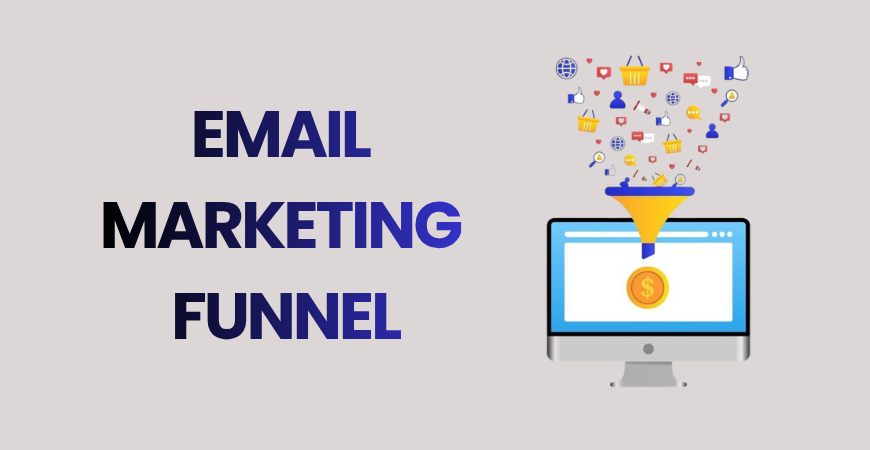
If you’re trying to grow online, understanding how an email marketing funnel works can completely change your results. Most beginners think email marketing is just about sending newsletters or promotions, but without a structured flow, those emails rarely convert.
That’s where a funnel comes in.
Instead of sending random emails and hoping for the best, an email funnel guides your audience step by step from discovering you to eventually trusting and buying from you. It eliminates guesswork and substitutes it with a clear system.
Once you grasp this system, email marketing shifts from being confusing to becoming predictable.
What Is an Email Marketing Funnel?
An email marketing funnel is a sequence of planned emails that moves a person through different stages, starting from a complete stranger to becoming a customer (and even a loyal follower).
It’s not just automation and tools. It’s intentional communication over time.
Think of it like a journey:
- Someone discovers your content
- They join your email list
- They start receiving valuable emails
- They begin to trust you
- Eventually, they take action
Each step is guided by a different type of email.
If you skip this structure, your emails feel random. And random emails rarely convert.
Why Most Beginners Fail at Email Marketing
Before we dive deeper into building an email marketing funnel, it’s important to understand what usually goes wrong.
1. No Clear Structure
Most beginners send emails whenever they feel like it. There’s no flow, no sequence, and no goal behind each message.
2. Selling Too Early
People try to promote products before building trust. This results in low engagement and increased unsubscribe rates.
3. Ignoring the Journey
Email marketing is not a one-step process. It’s a progression. Without that progression, results suffer.
4. Lack of Consistency
Sending one email this week and disappearing for the next three weeks breaks the connection.
This is exactly why having a proper email funnel matters. It solves all these problems by giving your emails direction.
The 5 Stages of an Email Marketing Funnel
Every effective email funnel follows a structured path. Let’s go through each stage in detail.
Stage 1: Awareness
This is where it all starts.
Your objective here is simple: get people to notice you.
At this stage, people are not familiar with you yet. So instead of selling, you should prioritize drawing in the right audience.
How to Do It
- Create helpful blog content
- Share valuable insights on social media
- Offer free resources (lead magnets)
A lead magnet could be:
- A checklist
- A short guide
- A free template
This is where getting email leads becomes important. Without an audience, there’s no funnel.
Once someone signs up, they move to the next stage.
Stage 2: Acquisition
Now that someone has joined your email list, your job is to make a strong first impression.
This is where your funnel truly begins.
What Happens Here?
- The subscriber receives a welcome email
- They get introduced to you or your brand
- Expectations are set
This stage often uses different kinds of emails, and understanding email types helps you structure this properly.
Why It Matters
If your first email doesn’t connect, most people won’t open your next one.
Stage 3: Nurturing
This is the most important and most ignored stage of an email funnel.
Here, your goal is not to sell.
Your goal is to build trust.
What to Send
- Educational emails
- Helpful tips
- Insights and ideas
- Personal experiences
This is where a solid email strategy comes into play.
Key Insight
People tend to make purchases from those they trust rather than from unfamiliar sources.
And trust is built through consistent value.
Stage 4: Conversion
Once trust is established, you can start introducing your offer.
This is where your email funnel starts generating results.
Types of Emails Used
- Promotional emails
- Launch emails
- Offer announcements
Important Rule
Don’t rush this stage.
If you try to sell too early, your audience won’t respond. But if you nurture them properly, even a simple offer can convert.
Stage 5: Retention
Most beginners stop after making a sale. That’s a mistake.
The real value of an email funnel comes from long-term relationships.
What to Focus On
- Consistent communication
- Re-engagement emails
- Continued value
Retention leads to:
- Repeat customers
- Higher lifetime value
- Stronger brand connection

How Email Types Fit Into the Funnel
Each stage of your email funnel uses different types of emails.
Here’s a simple breakdown:
| Funnel Stage | Email Type |
| Awareness | Lead magnets |
| Acquisition | Welcome emails |
| Nurturing | Educational + newsletters |
| Conversion | Promotional |
| Retention | Re-engagement |
Understanding these connections makes your funnel much more effective.
A Simple Email Funnel Example
Let’s make this practical.
Here’s a basic email marketing funnel you can implement right away:
Day 1 – Welcome Email
Introduce yourself and deliver any promised resource.
Day 2 – Value Email
Share a quick tip or insight that helps the reader.
Day 4 – Educational Email
Teach something useful in a simple way.
Day 6 – Soft Offer
Introduce your product or service casually.
Day 10 – Follow-Up Email
Remind them and add urgency if needed.
This simple sequence works because it builds trust before asking for action.
Tools You Need to Build an Email Funnel
You don’t need complex systems to start an email funnel.
However, possessing the right tools makes the process easier.
What You Actually Need
- Email automation platform
- Basic segmentation features
- Scheduling system
Choosing the right platform matters, especially when your list grows. That’s why selecting the right email tools early can save you a lot of effort later.
Why Email Marketing Funnels Work So Well
There’s a reason why marketers rely heavily on an email funnel.
1. Direct Communication
You’re not competing with algorithms like on social media.
2. High ROI
Email marketing consistently provides impressive returns compared to other channels.
3. You Own Your Audience
Unlike social media platforms, you own your email list
4. Personalization
Emails can be tailored based on user behavior and interests.
When you understand the email benefits, it becomes clear why funnels are so powerful.
Common Mistakes Beginners Make
Even with a good email funnel, mistakes can reduce effectiveness.
1. Skipping the Welcome Email
This weakens your first impression.
2. Selling Too Early
Without trust, offers don’t convert.
3. No Consistent Value
If emails don’t help, people stop reading.
4. Overcomplicating the Funnel
You don’t need 20 emails to get results.
5. Ignoring Inactive Subscribers
A well-maintained, engaged email list yields better results than a large list filled with inactive subscribers.
How to Get Started
If you’re building your first email marketing funnel, don’t overthink it. You don’t need a perfect setup; you just need a simple system that works.
Follow this beginner-friendly step-by-step plan:
Step 1: Create a Lead Magnet
People won’t share their email without a reason.
Offer something valuable and specific, such as:
- A checklist
- A short guide
- A free template
The goal is simple: solve one small problem quickly.
Step 2: Set Up a Welcome Email
This is your first real interaction.
Use this email to:
- Introduce yourself
- Deliver the promised resource
- Tell them what to expect next
A good welcome email builds instant trust.
Step 3: Plan 3–5 Value Emails
Before you sell anything, focus on helping.
Your emails should:
- Educate
- Solve small problems
- Share useful insights
This is where your relationship with the reader actually starts.
Step 4: Introduce Your Offer
Once trust is built, you can present your product or service.
Keep it simple:
- Explain the benefit
- Show how it helps
- Add a clear call-to-action
Don’t push, guide.
Step 5: Track, Learn, and Improve
Your first funnel won’t be perfect, and that’s okay.
Pay attention to:
- Open rates
- Click rates
- Responses
Then improve based on what works.
The best funnels are built through iteration, not perfection.
Frequently Asked Questions
1. What is an email marketing funnel in simple terms?
An email marketing funnel is a sequence of emails that guides a subscriber from joining your list to taking action.
2. How many emails should a beginner include?
Start with 4–6 emails. You can expand later.
3. Do I need automation tools?
Yes, basic automation helps you send emails at the right time without manual effort.
4. How long does it take to see results?
It depends on your audience and consistency, but most beginners start seeing engagement within a few weeks.
Final Thoughts
Building an email marketing funnel isn’t about complexity; it’s about clarity.
You don’t need fancy tools and long, complicated sequences. And you definitely don’t need a “perfect” setup to begin. What matters is having a clear path for your audience.
Start simple. Focus on delivering real value. Let trust build naturally before you try to sell anything.
Because at the end of the day, success in email marketing doesn’t come from sending more emails, it comes from sending the right ones, in the right order.
One email might get ignored. But a well-structured funnel creates results.

