Quick Answer
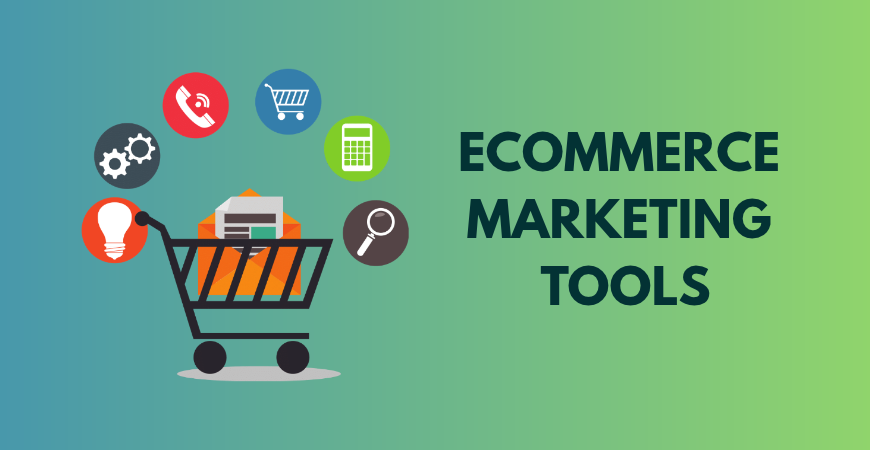
Ecommerce marketing tools are software platforms that help online stores attract shoppers, manage campaigns, analyse customer behaviour, improve conversions, and encourage repeat purchases. They make marketing activities easier to measure and manage, helping businesses identify what works and make informed decisions to grow online sales.
Running an online store involves more than uploading products and waiting for orders. You need to attract relevant visitors, understand their behaviour, make purchasing easier, and encourage customers to return. This is where ecommerce marketing tools become useful.
From improving search visibility to managing advertisements and customer communication, these platforms support different stages of an ecommerce marketing strategy. The right combination depends on your business goals, budget, and current challenges. Here are 10 tools worth considering and how each can help your online store grow.
Top 10 Ecommerce Marketing Tools That Help Grow Online Sales
1. Google Analytics 4
Getting website traffic is useful, but you also need to know whether those visitors are becoming customers. Google Analytics 4 (GA4) helps ecommerce businesses track website activity and understand how users interact with their stores.
With ecommerce event tracking, you can measure product views, add-to-cart actions, checkout activity, and purchases. You can also compare traffic sources to understand whether visitors arrive through organic search, paid advertising, or social media.
For example, if Instagram brings more visitors but Google Search generates more purchases, you can use that information to review your channel strategy. Understanding ecommerce analytics can help you interpret these metrics and identify opportunities to improve performance.
Best for: Businesses that want to measure traffic, customer behaviour, and sales performance.
2. Google Search Console
Google Search Console (GSC) helps website owners understand how their pages perform in Google Search. It is particularly useful for stores that want to attract organic traffic.
Its Performance report shows the search queries generating impressions and clicks. You can identify product and category pages that receive impressions but comparatively few clicks, monitor indexing, and investigate certain technical issues.
For instance, if a product category appears in search results but attracts few visitors, reviewing its queries and page title may reveal opportunities to make the result more relevant. Understanding technical SEO also helps ensure search engines can access and interpret your website properly.
Best for: Ecommerce businesses looking to monitor search visibility and improve organic performance.
3. Semrush
Semrush is an SEO and competitive research platform that helps businesses discover search opportunities and understand their competitors.
You can use it to find product-related keywords, compare keyword difficulty, analyse competitors’ organic visibility, and identify content gaps. These insights can guide improvements to product descriptions, category pages, and supporting blog content.
For example, a skincare store may discover that shoppers search for specific ingredients or skin concerns rather than broad product categories. These findings can help the business create more relevant pages and content.
Effective keyword research helps you understand what potential customers are searching for and align your content with their needs.
Best for: Stores investing in SEO, competitor research, and content marketing.
4. Google Ads
Google Ads helps ecommerce businesses reach potential customers through paid advertising. Search campaigns can display ads when people search for relevant products, while Shopping campaigns can showcase product images, prices, and store information when the required product feed and setup are in place.
For example, an online electronics store can use Search or Shopping campaigns to reach people looking for specific products. However, generating clicks is not enough. You should monitor conversions, advertising costs, and revenue to understand whether campaigns are profitable.
Accurate conversion tracking and relevant landing pages are essential for making better advertising decisions.
Best for: Stores that want to attract targeted traffic through paid search advertising.

5. Meta Ads Manager
Meta Ads Manager allows businesses to create and manage campaigns across Facebook and Instagram. It is useful for brands that rely on product images, videos, and visual storytelling.
You can promote new collections, reach potential customers, and reconnect with people who have previously interacted with your store. Catalogue-based ads can also display relevant products, depending on your setup.
For example, a clothing store could use short videos to introduce a new collection and retarget visitors who viewed specific products. Retargeting previous shoppers with relevant offers can also support customer retention, provided the campaigns are useful rather than repetitive.
Best for: Ecommerce brands looking to increase product discovery and reach customers through social media.
6. Mailchimp
Mailchimp helps businesses create email campaigns, organise subscribers, and automate customer communication. It can be used for welcome emails, promotional messages, product announcements, and abandoned-cart reminders, depending on the available plan and store integration.
For example, a new subscriber could receive a welcome email introducing the store’s main product categories. Existing customers might receive updates about new arrivals or relevant offers.
A well-planned email marketing strategy helps businesses maintain communication with interested shoppers and encourage them to revisit the store.
Best for: Small and growing ecommerce businesses that want to manage email campaigns.
7. Klaviyo
Klaviyo is a customer engagement platform commonly used by ecommerce brands for email and SMS marketing. It helps businesses create audience segments and automated communication flows using available customer and shopping data.
For example, a store can create different campaigns for first-time buyers, frequent customers, and shoppers who have not purchased recently. It can also automate messages related to abandoned carts, browsing activity, and post-purchase interactions.
This is where email segmentation becomes valuable. Instead of sending the same message to every subscriber, businesses can tailor communication based on interests, purchase history, and customer activity.
Best for: Ecommerce brands that need advanced customer segmentation and marketing automation.
8. Canva
Canva is a graphic design platform that helps businesses create visual marketing materials without requiring advanced design skills.
You can use it to design social media posts, promotional banners, product advertisements, and other campaign creatives. Templates and brand kit features can also help maintain visual consistency across platforms.
For example, a home decor store could create promotional graphics for different product collections and prepare seasonal campaign banners. However, attractive designs should also communicate accurate product information and match the message of the landing page.
Best for: Small businesses and marketing teams that regularly create promotional content.
9. Hotjar
An ecommerce store may receive relevant traffic but still struggle to convert visitors into customers. The problem could be related to confusing layouts, unclear product information, or a difficult checkout experience.
Hotjar offers features such as heatmaps, session recordings, and feedback tools. Heatmaps show where visitors click and scroll, while session recordings help you understand how users interact with specific pages.
Suppose visitors reach a product page but leave without adding anything to their carts. Reviewing their behaviour may reveal that important information is difficult to find or that the page layout creates confusion.
Applying conversion optimization principles can help businesses use these observations to improve product pages, calls to action, and the overall shopping experience.
Best for: Stores that want to identify usability problems and improve website conversions.
10. HubSpot
As an ecommerce business grows, managing customer information across different marketing activities can become difficult. HubSpot offers CRM and marketing tools that help businesses organise contacts, record interactions, and manage communication.
A CRM can maintain customer details and interaction histories in one place. Depending on the tools and integrations used, businesses can also organise contacts, manage follow-ups, and coordinate marketing activities.
Understanding the customer journey helps businesses identify what information shoppers need at different stages, from discovering a product to completing a purchase. This makes it easier to plan relevant communication and follow-ups.
Best for: Growing businesses that need a more organised approach to customer information and relationships.
Which Ecommerce Marketing Tools Should You Choose for Your Business?
You do not need all 10 platforms to run an effective ecommerce marketing strategy. Choose tools based on your immediate business requirements, available budget, and marketing priorities.
| Main business requirement | Tools to consider |
| Track website traffic and purchases | Google Analytics 4 |
| Monitor organic search performance | Google Search Console |
| Research keywords and competitors | Semrush |
| Generate paid search traffic | Google Ads |
| Advertise on social media | Meta Ads Manager |
| Manage email campaigns | Mailchimp |
| Personalise email and SMS communication | Klaviyo |
| Create promotional designs | Canva |
| Understand visitor behaviour | Hotjar |
| Organise customer information | HubSpot |
Start with tools that address your biggest challenges. For example, if your store receives traffic but few purchases, investigate the user experience and website navigation before investing heavily in more advertising. If organic visibility is weak, prioritise search performance and keyword research.
Before subscribing to a paid platform, compare its pricing, features, integration options, and limitations. Start with a small toolkit, learn how to use it properly, and add more tools as your requirements grow.
How Can Learning Digital Marketing Help You Use These Tools Effectively?
Knowing how to operate a marketing platform is only one part of ecommerce marketing. You also need to understand which campaign to run, which audience to target, what metrics to monitor, and how to improve performance.
For example, using Google Ads without understanding keyword intent or conversion tracking can lead to inefficient spending. Similarly, email campaigns without proper segmentation may result in irrelevant communication. Practical knowledge of SEO, paid advertising, social media, email marketing, and analytics helps connect individual tools to a broader marketing strategy.
A practical digital marketing course can help learners develop these skills through structured training. Academy of Digital Marketing (ADM), for example, offers digital marketing training for people interested in understanding and applying different marketing techniques.

Frequently Asked Questions
1. What are ecommerce marketing tools?
Ecommerce marketing tools are software platforms that help online businesses manage SEO, advertising, email campaigns, social media promotion, website analytics, and customer relationships. They help attract shoppers, understand customer behaviour, and improve marketing performance.
2. Which tools are best for ecommerce marketing?
The best tools depend on your goals. GA4 helps track website performance, Google Search Console monitors organic search visibility, Semrush supports SEO research, Google Ads and Meta Ads Manager help with paid promotion, and Mailchimp and Klaviyo support email marketing.
3. Are there free ecommerce marketing tools for beginners?
Yes. Google Analytics 4 and Google Search Console are available without a standard subscription fee. Canva and several other platforms also offer free versions with limitations. Check their current feature restrictions before choosing a tool.
4. Which tools help increase ecommerce sales?
Google Ads and Meta Ads Manager can help attract potential customers, Mailchimp and Klaviyo support customer communication, and Hotjar helps identify website usability issues. Analytics platforms help businesses measure the results of these activities.
5. What tools are used to track ecommerce marketing performance?
Google Analytics 4 measures website traffic, ecommerce events, and purchases. Google Search Console tracks organic search performance, while advertising and email platforms provide campaign reports. Combining these insights gives businesses a broader view of marketing performance.
6. Do small ecommerce businesses need marketing automation tools?
Not necessarily when starting out. Small businesses can begin with basic analytics, search monitoring, and email campaigns. As their customer base and marketing activities grow, automation tools can help manage repetitive communication more efficiently.
Conclusion
The right ecommerce marketing tools can help online stores attract visitors, understand customer behaviour, improve the buying experience, and build stronger customer relationships. However, using more tools does not automatically lead to higher sales. Start by identifying your biggest marketing challenge, choose platforms that address it, and use their insights to make informed improvements. A focused toolkit supported by practical marketing knowledge is often more valuable than investing in software you do not yet need.