To increase ecommerce sales from existing traffic, focus on converting more of the visitors you already have. Improve product pages, simplify checkout, strengthen trust, personalize recommendations, increase order value, optimize mobile experiences, and recover visitors who leave without purchasing.
Introduction
Getting more traffic is not always the fastest way to increase ecommerce sales. If your store already attracts visitors but only a small percentage purchase, improving the existing shopping experience can create more sales without increasing your traffic.
The goal is to make every existing visitor more likely to buy. Small improvements to product pages, checkout, offers, and follow-up can turn underperforming traffic into additional revenue.
Why Existing Traffic Can Generate More Ecommerce Sales
Traffic only creates an opportunity. Revenue depends on what visitors do after they arrive.
For example, imagine an online store receives 20,000 visitors every month and converts 1.5% of them. That produces 300 orders. If the store increases its conversion rate to 2.5%, the same traffic generates 500 orders.
| Before | After | |
| Visitors | 20,000 | 20,000 |
| Conversion Rate | 1.5% | 2.5% |
| Orders | 300 | 500 |
The business didn’t need to attract another visitor. It simply became more effective at converting existing traffic.
8 Ways to Get More Ecommerce Sales From Existing Traffic
1. Improve Your Product Pages
Your product page is one of the most important places to improve if you want more ecommerce sales. Visitors need enough information to understand the product, evaluate its value, and feel confident about purchasing.
Use clear product descriptions, high-quality images, customer reviews, pricing, specifications, delivery information, and return policies. Explain benefits instead of only listing features. For example, instead of simply stating that a bag is waterproof, explain how that feature protects the customer’s belongings during rainy conditions.
Improving ecommerce conversion optimization on product pages can also involve testing different headlines, calls to action, layouts, and product information. The goal is to remove uncertainty and make the buying decision easier.
Product page checklist
- Clear product title
- High-quality images
- Benefits and features
- Customer reviews
- Pricing and availability
- Delivery information
- Return policy
- Clear call-to-action
2. Improve Your Ecommerce Conversion Rate
If your website receives relevant traffic but generates relatively few orders, your conversion rate may be the biggest opportunity.
Start by identifying pages that receive significant traffic but produce few purchases. Then look for issues such as unclear calls to action, weak product information, slow loading times, distracting elements, or a mismatch between the visitor’s search intent and the page.
For example, if 10,000 visitors generate 200 orders, your conversion rate is 2%. Increasing that to 2.5% would generate 250 orders from the same traffic.
Don’t try to change everything at once. Test one important improvement, measure its effect, and then move to the next problem.
3. Simplify the Checkout Experience
Getting a visitor to add a product to their cart is not enough. They still need to complete the purchase.
A complicated checkout can cause shoppers to leave even when they are ready to buy. Common problems include too many form fields, forced account creation, unexpected shipping costs, limited payment options, and poor mobile usability.
Monitor your cart abandonment rate to understand how many shoppers are leaving after adding products to their carts. Make checkout easier by offering guest checkout, reducing unnecessary fields, displaying the total cost clearly, and providing familiar payment methods.
A simple checkout should answer three questions immediately:
- How much will I pay?
- When will I receive my order?
- How can I complete the payment?
The fewer unnecessary obstacles customers face, the greater the chance that they will complete their purchase.
4. Increase Average Order Value
More ecommerce sales don’t necessarily mean finding more customers. You can also increase revenue by encouraging existing buyers to spend more per order.
This is where average order value plays a crucial role. Product bundles, cross-selling, upselling, quantity discounts, and free-shipping thresholds can all encourage larger purchases.
For example, a store receives 500 orders with an average order value of ₹2,000. Its revenue is ₹10,00,000. If the store increases the average order value to ₹2,400 while maintaining the same number of orders, revenue rises to ₹12,00,000.
The key is relevance. A customer buying a camera may appreciate a memory card or protective case. An unrelated recommendation is more likely to distract than encourage a purchase.

5. Personalize Product Recommendations
Visitors have different needs, so showing everyone the same products limits the opportunities available to your store.
Use browsing behavior, previous purchases, and product relationships to create more relevant recommendations. Useful formats include:
- Customers Also Bought
- Frequently Bought Together
- Recommended for You
- Recently Viewed
- Complete the Look
For example, someone viewing a laptop may also need a laptop bag, wireless mouse, or external storage. Showing these products at the right moment can make shopping easier while increasing the potential value of the order.
Personalization doesn’t have to be complicated. Even basic recommendations based on related products can make a noticeable difference.
6. Strengthen Trust and Social Proof
Some visitors don’t purchase because they are interested but uncertain. They may question product quality, delivery reliability, return policies, or whether the business can be trusted.
Use reviews, ratings, testimonials, user-generated content, clear return policies, secure payment information, and accessible customer support to reduce that uncertainty.
Social proof is particularly useful on product pages because it helps potential buyers understand the experiences of previous customers.
Trust should also be consistent throughout the buying journey. If the product page looks professional but important delivery or refund information is difficult to find, customers may still hesitate.
7. Optimize the Mobile Shopping Experience
A large amount of ecommerce browsing happens on smartphones, but mobile visitors can easily be lost through poor usability.
Check whether your product pages load quickly, text is readable, buttons are easy to tap, navigation is simple, and checkout forms work properly on smaller screens.
Don’t only test your homepage. Follow the complete journey:
Product → Cart → Checkout → Payment
A mobile visitor who struggles to select a product variant, enter information, or complete payment may leave even if they were genuinely interested.
8. Recover Visitors Who Don’t Buy Immediately
Not every visitor will purchase during their first session. Some are comparing products, waiting for a better time to buy, or simply researching their options.
Instead of considering these visitors lost, use recovery strategies to bring them back. Abandoned-cart emails can remind shoppers about products they left behind, while browse-abandonment campaigns can reconnect with visitors who viewed products without purchasing.
Retargeting campaigns can also show relevant products to previous visitors after they leave your website.
This is where customer retention can support acquisition efficiency. Re-engaging people who have already interacted with your store can be more valuable than constantly depending on completely new audiences.
The key is to keep the communication useful and relevant rather than sending excessive promotional messages.
How to Identify Your Biggest Sales Opportunity
You don’t need to optimize your entire store at once. Look for the point where the biggest number of potential purchases is being lost.
| What You See | Possible Problem |
| High traffic, low conversions | Product page or landing-page issue |
| High product views, low add-to-cart | Value, pricing, or trust issue |
| High add-to-cart, low purchases | Checkout or payment friction |
| Good conversions, low revenue | Low order value |
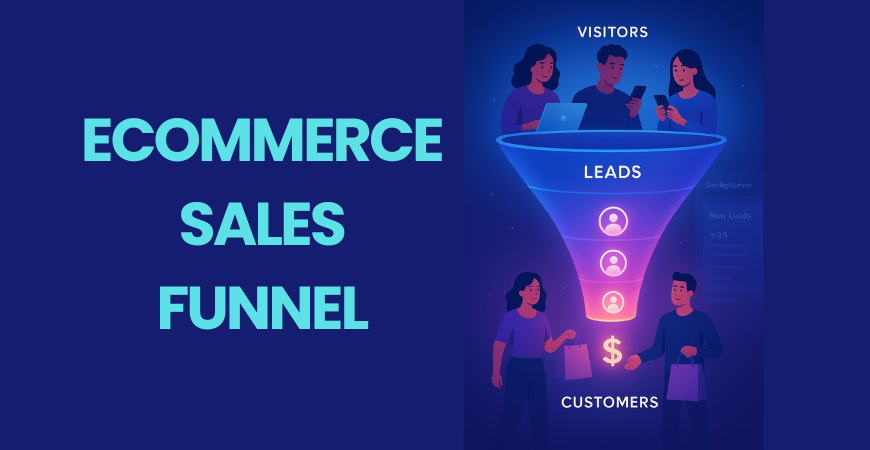
Understanding your sales funnel can help you identify where visitors are dropping out and which problem deserves attention first.
Start with the largest bottleneck, make one focused improvement, and measure the result before moving to another area.
Metrics to Track
After making improvements, track whether they actually increase sales.
| Metric | What It Tells You |
| Conversion Rate | How many visitors become customers |
| Revenue Per Visitor | Revenue generated from each visitor |
| Average Order Value | Revenue generated per order |
| Cart Abandonment Rate | Lost purchase opportunities |
| Checkout Completion Rate | Checkout effectiveness |
Use ecommerce analytics to compare these metrics over time rather than judging performance based on a single day or campaign.
For beginners, understanding how analytics, conversion optimization, and digital marketing channels work together can provide a stronger foundation for making data-driven decisions. Academy of Digital Marketing (ADM), for example, covers these areas as part of its structured digital marketing education.
Frequently Asked Questions
How can I increase ecommerce sales without increasing traffic?
Improve conversion rates, product pages, checkout, trust signals, personalization, order value, and visitor recovery. These changes help more existing visitors become customers.
Why is my ecommerce store getting traffic but no sales?
The problem may be poor traffic quality, weak product pages, unclear pricing, lack of trust, complicated checkout, or poor mobile usability.
What should I optimize first?
Start with high-traffic pages that have low conversion rates. Identify where visitors are dropping off and fix the biggest problem first.
Can a higher conversion rate increase sales?
Yes. If traffic remains constant, converting a larger percentage of visitors directly increases the number of orders.
How can I recover visitors who don’t purchase?
Use abandoned-cart emails, browse-abandonment campaigns, retargeting, and relevant follow-up messages to bring interested visitors back.
Conclusion
Increasing ecommerce sales doesn’t always require more traffic. By improving product pages, conversion rates, checkout, order value, personalization, trust, mobile usability, and visitor recovery, businesses can generate more revenue from the audience they already have. Focus on the biggest weakness first, measure the results, and keep improving the parts of the buying experience that have the greatest impact.