The Short Answer
Ecommerce customer acquisition strategies are the methods online businesses use to attract, convert, and retain new customers. The most effective strategies include search engine optimization, content marketing, paid advertising, email marketing, referral programs, influencer partnerships, and conversion optimization. Businesses that combine multiple acquisition channels often achieve more sustainable growth while keeping customer acquisition costs under control.
Introduction
Ecommerce customer acquisition strategies have become increasingly important as online competition continues to intensify. Many businesses assume growth simply comes from spending more money on advertising, but acquiring customers has become significantly more expensive in recent years.
Consumers now compare multiple brands, read reviews, watch videos, and research products extensively before making purchasing decisions. As a result, businesses need smarter acquisition systems rather than larger marketing budgets.
The most successful ecommerce brands focus on building diversified acquisition channels that attract qualified buyers, improve conversion efficiency, and support long-term profitability. This guide explains the ecommerce customer acquisition strategies that actually work and how businesses can implement them effectively.
Why Customer Acquisition Is Becoming More Challenging
Customer acquisition costs continue to rise across nearly every digital marketing channel.
Several factors contribute to this trend.
Competition has increased dramatically. Thousands of ecommerce businesses compete for visibility on search engines, social media platforms, and advertising networks. Since platforms like Google and Meta operate using auction systems, greater competition often leads to higher advertising costs.
Consumer behavior has also changed significantly. Most customers no longer purchase immediately after discovering a brand. Instead, they explore alternatives, compare prices, read customer feedback, and interact with businesses multiple times before converting.
Many ecommerce stores also become overly dependent on a single traffic source. Businesses relying entirely on paid advertising often experience declining profitability whenever advertising costs increase.
This is why modern ecommerce customer acquisition strategies focus on building sustainable growth systems rather than depending exclusively on paid traffic.
What Are Ecommerce Customer Acquisition Strategies?
Ecommerce customer acquisition strategies are the methods businesses use to attract potential buyers and convert them into paying customers.
These strategies extend beyond simply generating website traffic.
An effective acquisition process usually involves:
- Attracting visitors
- Building trust
- Capturing leads
- Converting customers
- Encouraging repeat purchases
Businesses that combine multiple acquisition channels often achieve stronger and more stable growth compared to businesses relying on a single source of traffic.
1. Search Engine Optimization (SEO)
Search engine optimization remains one of the most effective ecommerce customer acquisition strategies because it targets users actively searching for products and solutions.
Unlike paid advertising, SEO can continue generating traffic long after content has been published.
Benefits of SEO include:
- Long-term traffic generation
- Reduced dependence on advertising
- Higher purchase intent
- Lower acquisition costs over time
Businesses can strengthen SEO performance by focusing on:
- Product page optimization
- Category page optimization
- Keyword research
- Blog content creation
- Internal linking
For example, a sporting goods store ranking for keywords such as:
“best running shoes for beginners”
can consistently attract highly qualified visitors without paying for every click.
SEO also plays an important role in building a broader ecommerce marketing strategy because organic visibility supports long-term growth.
2. Content Marketing
Content marketing helps businesses educate potential customers while building trust and authority.
Rather than directly promoting products, businesses provide useful information that helps consumers make informed decisions.
Examples include:
- Buying guides
- Product comparisons
- Tutorials
- Industry insights
- Educational blog posts
- Frequently asked questions
A skincare brand publishing content such as:
“How to Choose a Vitamin C Serum”
may attract visitors who are still researching products but could become customers later.
Benefits of content marketing include:
- Increased organic traffic
- Better brand awareness
- Improved customer trust
- Stronger SEO performance
- Higher engagement levels
Content marketing is particularly valuable because it supports acquisition throughout multiple stages of the customer journey.
3. Paid Advertising
Paid advertising remains one of the fastest ways to generate traffic and acquire customers.
Many businesses use paid campaigns to supplement their long-term acquisition efforts.
Common advertising channels include:
- Google Ads
- Shopping Ads
- Meta Ads
- Instagram Ads
- YouTube Ads
- Retargeting campaigns
Advantages include:
- Immediate visibility
- Precise audience targeting
- Scalable growth opportunities
- Faster testing capabilities
However, paid advertising also presents challenges.
These include:
- Rising costs per click
- Increased competition
- Ad fatigue
- Reduced profitability
Businesses should regularly evaluate customer acquisition costs and compare them against lifetime customer value to maintain healthy margins.
While paid campaigns deliver faster results, they perform best when supported by other ecommerce customer acquisition strategies.
4. Email Marketing
Email marketing remains one of the most effective channels for nurturing potential buyers and converting visitors into customers.
Many first-time visitors are interested in products but may not be ready to purchase immediately.
Email provides businesses with an opportunity to maintain communication without continuously paying for traffic.
Lead capture methods include:
- Newsletter signups
- Discount offers
- Exclusive promotions
- Product guides
- Early access opportunities
Some effective campaigns include:
- Welcome sequences
- Educational campaigns
- Product recommendations
- Promotional emails
- Abandoned cart reminders
Many brands continue investing heavily in ecommerce email marketing because it generates some of the highest returns among all digital channels.
Email marketing also supports long-term customer relationships and improves overall acquisition efficiency.
5. Referral Programs
Referral programs encourage existing customers to recommend products and services to others.
People generally trust recommendations from friends and family more than traditional advertising.
Businesses can incentivize referrals through:
- Discount codes
- Store credits
- Cashback rewards
- Loyalty points
- Free products
Examples include:
“Refer a friend and both receive ₹500 off your next purchase.”
Benefits of referral marketing include:
- Lower acquisition costs
- Stronger trust signals
- Better conversion rates
- Increased brand advocacy
Referral programs often produce highly qualified customers because referred users already have confidence in the brand before making a purchase.
6. Influencer Partnerships
Influencer marketing has become an increasingly popular customer acquisition method.
Consumers often rely on creators for product recommendations and purchasing inspiration.
Businesses may collaborate with:
- Micro-influencers
- Industry experts
- Content creators
- Brand ambassadors
- Affiliate partners
Influencer campaigns can provide:
- Social proof
- Greater brand exposure
- Audience credibility
- Increased trust
Micro-influencers often perform exceptionally well because their audiences tend to be more engaged.
Businesses should prioritize authentic partnerships rather than focusing solely on follower counts.
User-generated content created through influencer collaborations can also support advertising campaigns and improve conversion rates.
7. Conversion Optimization
Many acquisition challenges are actually conversion problems.
Businesses frequently assume they need more visitors when the real issue is that existing traffic fails to convert effectively.
Imagine two stores:
| Store | Monthly Visitors | Conversion Rate | Customers |
| Store A | 20,000 | 1% | 200 |
| Store B | 20,000 | 3% | 600 |
Store B acquires three times as many customers despite attracting the same amount of traffic.
Common conversion barriers include:
- Slow-loading pages
- Poor navigation
- Weak product descriptions
- Low-quality images
- Hidden costs
- Checkout friction
Improving these areas often produces faster results than increasing advertising budgets.
Businesses investing in ecommerce conversion optimization frequently discover that small improvements can significantly reduce acquisition costs.
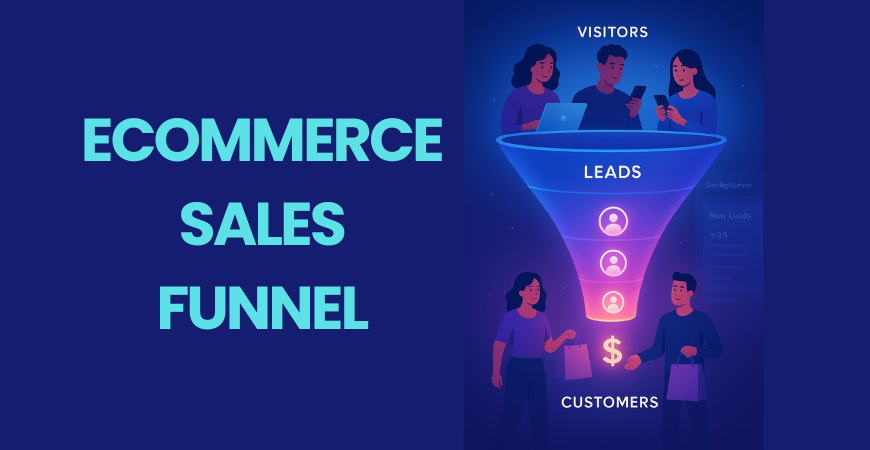
8. Build a Sales Funnel That Converts
Successful ecommerce customer acquisition strategies rely on structured customer journeys.
A strong sales funnel guides visitors from awareness to purchase while minimizing friction.
Typical stages include:
Awareness
Customers discover the brand through:
- SEO
- Social media
- Paid campaigns
- Content marketing
Consideration
Potential buyers compare products and evaluate alternatives.
Businesses can strengthen this stage through:
- Reviews
- Testimonials
- Product comparisons
- Educational content
Conversion
At this stage, businesses should simplify purchasing.
Strategies include:
- Faster checkout processes
- Transparent pricing
- Flexible payment options
- Trust signals
Retention
The customer relationship does not end after the purchase.
Post-purchase communication often leads to repeat purchases and stronger profitability.
Businesses with effective funnels generally convert visitors more efficiently while reducing acquisition expenses.
9. Diversify Customer Acquisition Channels
One of the biggest mistakes ecommerce businesses make is relying entirely on a single source of traffic.
Algorithms change.
Advertising costs fluctuate.
Consumer preferences evolve.
Businesses that diversify acquisition efforts typically experience greater stability.
| Channel | Speed | Cost | Long-Term Potential |
| SEO | Slow | Low | High |
| Paid Ads | Fast | High | Medium |
| Email Marketing | Medium | Low | High |
| Influencers | Medium | Medium | Medium |
| Referrals | Medium | Low | High |
Diversification creates multiple pathways for attracting customers and reduces dependence on any individual platform.
This approach makes ecommerce customer acquisition strategies more resilient over time.
Customer Lifetime Value Changes Acquisition Economics
Many businesses evaluate customers based only on their first purchase.
This often creates a misleading view of acquisition profitability.
Consider two customers.
Customer A spends ₹2,000 once.
Customer B spends ₹2,000 every three months for several years.
Although both customers generate the same initial revenue, Customer B becomes substantially more valuable over time.
Businesses focusing on customer retention often experience lower acquisition pressure because repeat customers contribute significant long-term value.
Retention also improves profitability because retaining existing customers is usually less expensive than constantly acquiring new ones.
Acquisition and retention should be viewed as complementary systems rather than separate initiatives.
Warning Signs Your Acquisition Strategy Is Becoming Unprofitable
Certain patterns often indicate acquisition challenges.
Customer Acquisition Costs Keep Rising
When acquisition costs increase faster than revenue, profitability gradually declines.
Traffic Is Growing But Revenue Is Flat
This may suggest poor conversion performance.
Advertising Determines Growth
Businesses that lose sales immediately after stopping ads may rely too heavily on paid channels.
Repeat Purchases Remain Low
Weak retention increases pressure on acquisition efforts because businesses constantly need new customers.
Recognizing these warning signs early allows businesses to refine their ecommerce customer acquisition strategies before performance deteriorates.

Frequently Asked Questions
1. What are ecommerce customer acquisition strategies?
Ecommerce customer acquisition strategies are methods businesses use to attract and convert new customers through channels such as SEO, content marketing, paid advertising, email marketing, referrals, and influencer partnerships.
2. Why are customer acquisition costs increasing?
Competition across digital channels continues to grow, advertising costs are rising, and consumers typically require more interactions before making purchasing decisions.
3. Which customer acquisition strategy works best?
There is no single best strategy. Businesses often achieve the strongest results by combining SEO, content marketing, email marketing, paid advertising, and referral initiatives.
4. How can ecommerce businesses reduce acquisition costs?
Businesses can reduce acquisition costs by improving conversion rates, attracting higher-intent visitors, increasing customer lifetime value, and diversifying traffic sources.
5. Why is customer retention important for acquisition?
Retention increases customer lifetime value, making acquisition efforts more profitable because each customer generates greater long-term revenue.
Conclusion
Ecommerce customer acquisition strategies are no longer limited to generating more traffic. Rising competition, increasing advertising costs, and changing customer behavior require businesses to adopt smarter and more diversified approaches to growth.
The most effective ecommerce customer acquisition strategies combine SEO, content marketing, paid advertising, email marketing, referral programs, influencer partnerships, and conversion optimization. Businesses that focus on attracting qualified visitors, improving user experiences, and building long-term customer relationships are often able to grow more sustainably while maintaining profitability.