
The Short Answer
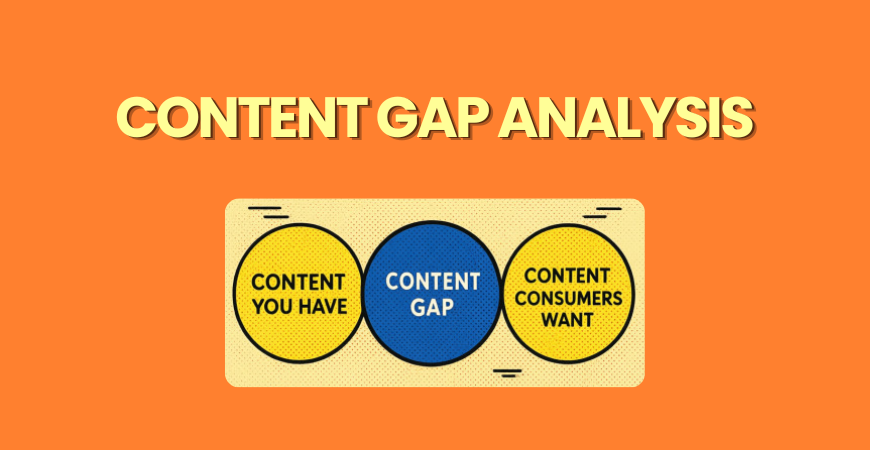
Content gap analysis is the process of comparing your website with competitors, search results, and audience needs to find topics or information you are missing or covering poorly. It helps identify valuable content opportunities, improve existing pages, satisfy search intent, and build stronger topic coverage.
Introduction
Publishing content regularly does not guarantee that you are covering everything your audience needs. You may have dozens of articles but still miss important questions, subtopics, or search opportunities that competitors are addressing.
Content gap analysis helps solve this problem by showing where your content falls short compared with competitors and user expectations. Instead of guessing what to publish next, you can use evidence to identify topics worth creating, expanding, or updating.
What Is Content Gap Analysis?
Content gap analysis is a structured process for identifying topics, questions, keywords, or information that your website does not cover adequately but may be valuable to your audience.
A gap does not always mean a completely missing topic. You may have an article that covers a subject but fails to address important subtopics, uses outdated information, or does not match the search intent behind the target query.
For example, suppose a digital marketing website has an article explaining email marketing but does not cover automation, segmentation, list building, or performance measurement. If these subjects are consistently covered by relevant competitors and searched by users, they may represent content opportunities.
The goal is not to copy competitors. It is to understand what information is missing from your own content and determine where you can provide something more useful.
Types of Content Gaps to Look For
A useful analysis looks beyond missing keywords. Here are five common types of gaps.
Missing Topics
This is the simplest type of gap. Relevant competitors cover a subject that your website does not address at all.
For example, if your site covers Google Ads basics but competitors provide detailed resources on conversion tracking, that subject may deserve consideration.
Content Depth Gaps
Sometimes the topic exists on your website, but the coverage is incomplete.
An SEO article might explain keyword research without discussing search intent, keyword clustering, or keyword mapping. Rather than creating another broad SEO article, expanding the existing resource may be more useful. This is where content optimization can help.
Search Intent Gaps
A page can target a relevant keyword without actually satisfying what the searcher wants.
Someone searching for “best email marketing platform” expects comparisons, features, pricing considerations, and use cases—not just a definition of email marketing.
Understanding search intent helps determine whether your content is answering the right question.
Freshness Gaps
Information becomes outdated, particularly in areas such as technology and digital marketing.
Old statistics, software features, platform policies, examples, or recommendations can make an otherwise useful article less competitive. If competing pages provide substantially newer information, updating your content may close the gap.
Format Gaps
The information may already exist, but the format may not meet user preferences.
For example, a complex tutorial might be easier to understand as a checklist, video, infographic, or step-by-step guide. A content gap can therefore involve presentation as well as subject coverage.

How to Perform a Content Gap Analysis
A practical content gap analysis can be completed through six main steps.
Step 1: Choose Your Core Topic
Start with a specific topic rather than analyzing your entire website.
For example, an ecommerce business could examine ecommerce marketing, while a digital marketing website might focus specifically on SEO, content marketing, paid advertising, or email marketing.
A focused topic makes competitor comparisons easier and produces more relevant opportunities.
Step 2: Identify Relevant Competitors
Find websites that compete for the same audience and search queries.
Your competitors do not necessarily have to be businesses selling the same product or service. Any website consistently competing for the topics you want to rank for can provide useful content insights.
A focused competitor analysis helps reveal what these websites cover, how deeply they cover it, and which topics appear repeatedly across the search results.
Step 3: Compare Their Content With Yours
Review the main topics and subtopics covered by your competitors and compare them with your existing content.
A simple table can make the gaps easier to identify:
| Topic | Competitor Coverage | Your Coverage | Opportunity |
| SEO basics | Strong | Strong | Low |
| Keyword research | Strong | Partial | Medium |
| Search intent | Strong | Missing | High |
| Content optimization | Strong | Partial | High |
| SEO reporting | Moderate | Missing | Medium |
Look for patterns rather than isolated examples. If several relevant competitors cover the same subject and your website does not, the opportunity is usually more significant.
Step 4: Find and Validate Keywords
Once you identify potential gaps, check whether there is genuine audience interest.
Use Google Search, autocomplete, People Also Ask, Search Console, and keyword research platforms to investigate related queries.
Keyword research can help determine whether a potential topic has search demand and reveal related terms that should be covered within the eventual content.
However, search volume should not be the only deciding factor. A lower-volume topic can still be valuable if it is highly relevant to your audience or business.
Step 5: Evaluate Search Intent
Before creating a new page, examine the current search results.
Determine whether users are looking for:
- A definition
- A tutorial
- A comparison
- Examples
- Tools
- A solution to a specific problem
If your proposed content does not match the dominant intent, the gap may not be worth pursuing in its current form.
Step 6: Prioritize and Act on the Gaps
Finally, decide which opportunities deserve action.
Consider:
| Factor | High-Priority Gap |
| Audience relevance | Strong |
| Search demand | Clear |
| Business relevance | Strong |
| Existing coverage | Missing or weak |
| Search intent | Clear |
| Value potential | High |
Then decide whether to create a new page, expand an existing one, or update an outdated resource.
Content Gap Analysis Example
Imagine a website has several articles about content marketing:
- What Is Content Marketing?
- Benefits of Content Marketing
- Types of Content Marketing
- Content Marketing Strategy
A competitor review reveals that competing websites also cover:
- Content ideation
- Content repurposing
- Content gap analysis
- Content marketing funnel
- Content marketing ROI
- Content calendars
These subjects may represent opportunities, but they should not automatically become six new articles.
The website should first check search intent, existing coverage, audience relevance, and how each topic fits into its wider content marketing plan.
This turns competitor research into a strategic content decision rather than simply collecting competitor keywords.
How to Find Content Gaps Without Expensive Tools
You can find many useful gaps without paying for an advanced SEO platform.
| Method | What to Look For |
| Google Search | Recurring topics and SERP patterns |
| People Also Ask | Common user questions |
| Autocomplete | Long-tail topic ideas |
| Search Console | Queries your pages partially address |
| Competitor websites | Missing or stronger coverage |
| Online communities | Real audience problems |
For example, search your main topic on Google and compare several top-ranking pages. Note the questions, subtopics, examples, and formats they consistently include. Then compare those findings with your own article.
This manual process can uncover meaningful opportunities before you even use a dedicated SEO tool.
How to Prioritize the Content Gaps You Find
Not every competitor topic deserves a new page.
Ask four questions before acting:
Is it relevant?
Does the topic matter to your target audience?
Is there demand?
Are people searching for it, asking about it, or showing interest in it?
Can you add value?
Can you provide better explanations, examples, updated information, original insights, or a more useful format?
Does it fit your website?
Will it strengthen your existing subject coverage rather than introduce an unrelated topic?
If an existing page already addresses the subject but is incomplete, improving it may be better than publishing another article. This approach can reduce duplication and create a cleaner website structure.
How Content Gap Analysis Supports SEO
Content gap analysis supports SEO by identifying subjects your audience cares about but your website does not cover adequately.
It can uncover missing keywords, unanswered questions, outdated information, and weak subtopics. These findings can then guide SEO content creation, content updates, and internal linking.
It can also strengthen topical authority. When a website consistently covers the important aspects of a subject instead of publishing isolated articles, its content library becomes more comprehensive and useful.
For example, a website building authority around SEO might create connected resources covering keyword research, search intent, technical SEO, content optimization, link building, and SEO measurement. Each page addresses a different need while contributing to broader subject coverage.
Content gap analysis is also a useful skill for marketers developing broader digital marketing training, as it brings together competitor research, keyword research, search intent, content strategy, and SEO into one practical workflow.
The key is quality and relevance. Publishing dozens of pages simply because competitors have them is not a content strategy. The objective is to build useful coverage around topics that genuinely matter to your audience.
Best Tools for Content Gap Analysis
Tools can make research faster, but they should support human judgment rather than replace it.
| Tool | Best Use |
| Semrush | Competitor and keyword gap research |
| Ahrefs | Content and keyword comparisons |
| Google Search Console | Existing search opportunities |
| Google Search | SERP and question research |
| Google Trends | Topic interest and trends |
| ChatGPT | Organizing findings and expanding topic angles |
For example, Semrush or Ahrefs can reveal keywords that competitors rank for while your website does not. Search Console provides the opposite perspective by showing queries your own pages already appear for.
Combining these data points with manual SERP analysis usually produces a more reliable picture of your content opportunities.
Frequently Asked Questions
1. What is content gap analysis in SEO?
Content gap analysis is the process of finding topics, questions, keywords, or information that your website is missing or covering less effectively than competitors and searchers expect.
2. How do I find content gaps?
Compare your existing content with relevant competitors, search results, audience questions, and keyword data. Look for subjects that are missing, outdated, incomplete, or poorly aligned with search intent.
3. What is an example of a content gap?
If your website explains email marketing but does not cover automation, segmentation, or list building while relevant competitors do, those missing areas could represent content gaps.
4. Can content gap analysis improve SEO?
Yes. It can uncover relevant search opportunities, improve topic coverage, identify pages that need updating, and help you create content that better satisfies user intent.
5. Can I perform content gap analysis without paid tools?
Yes. Google Search, autocomplete, People Also Ask, Search Console, competitor websites, forums, and customer questions can reveal many useful content opportunities.
6. Should I create new content for every gap?
No. Some gaps require new pages, while others are better addressed by expanding or updating existing content. Relevance, intent, demand, and potential value should guide the decision.
Conclusion
Content gap analysis is not about copying everything competitors publish. It is a structured way to discover missing topics, unanswered questions, weak coverage, and outdated information that matter to your audience. By comparing competitor content with your own, validating search intent and demand, and prioritizing the strongest opportunities, you can create or improve content with a clear purpose instead of publishing based on guesswork.

