Introduction
WhatsApp broadcast messages allow businesses to reach customers directly through a platform they already use every day. Instead of relying solely on email campaigns or social media visibility, businesses can deliver updates, offers, and reminders in a faster and more conversational way.
As messaging becomes a preferred communication channel, many brands are using broadcast messaging to engage larger audiences without sacrificing personalization. When used correctly, it helps businesses stay visible, relevant, and connected to customers.
However, success depends on how broadcasts are used. Sending helpful and timely messages can strengthen customer relationships, while excessive or irrelevant communication can quickly feel like spam. Understanding that balance is what separates effective broadcast campaigns from ignored messages.
What Are WhatsApp Broadcast Messages?
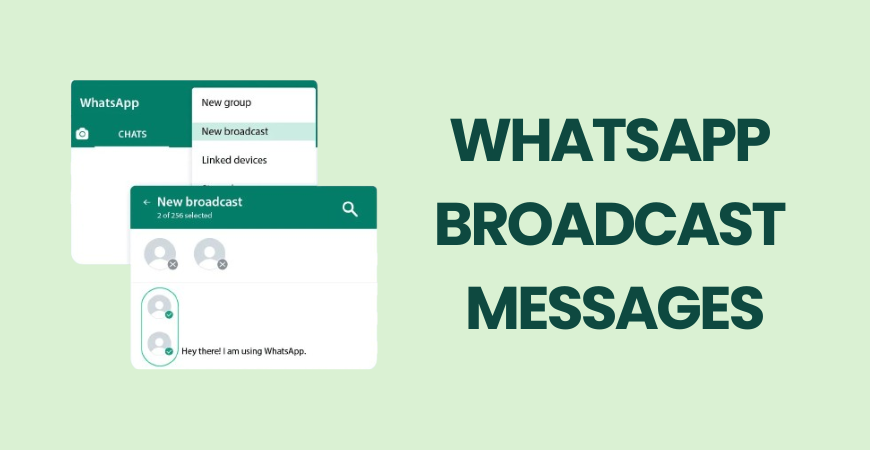
WhatsApp broadcast messages allow businesses to send a single message to multiple contacts simultaneously while maintaining a private one-on-one conversation experience.
Unlike WhatsApp groups, recipients do not see each other. Every message appears as an individual chat, creating a more personal communication experience.
Businesses commonly use broadcast messages for:
- Product announcements
- Event reminders
- Promotional offers
- Educational updates
- Appointment confirmations
- Customer engagement campaigns
- Follow-up communication
The biggest advantage is scalability. Instead of manually sending the same message repeatedly, businesses can communicate with hundreds or thousands of customers while maintaining conversation consistency.
WhatsApp Broadcast Messages vs WhatsApp Groups
Many beginners confuse broadcasts with WhatsApp groups, but the two serve very different purposes.
| Feature | Broadcast Messages | WhatsApp Groups |
| Privacy | Individual chats | Shared conversations |
| Recipient Visibility | Hidden | Visible |
| Business Communication | Excellent | Limited |
| Personalization | High | Low |
| Professional Experience | Better | Less structured |
Groups encourage community interaction, while broadcast messages focus on direct business-to-customer communication.
For most marketing and customer engagement activities, broadcasts offer a cleaner and more professional experience.
Why Businesses Are Using WhatsApp Broadcast Messages
Customer expectations have changed dramatically over the last few years.
People now expect businesses to communicate quickly and conveniently. Waiting for email responses or navigating lengthy support processes often creates friction.
Businesses using a dedicated WhatsApp marketing platform have discovered that messaging-based communication often produces faster engagement than traditional channels.
There are several reasons why broadcast messages are becoming increasingly popular.
Faster Customer Reach
A broadcast can instantly reach a large audience within seconds.
Whether you’re announcing a webinar, promoting a seasonal offer, or sharing a product update, broadcasts allow information to spread quickly.
Higher Visibility
Many email campaigns struggle with low open rates.
Messaging platforms often generate stronger visibility because notifications appear directly on users’ devices, increasing the likelihood that messages are noticed.
Better Customer Experience
People generally prefer conversational communication over corporate-style marketing.
Broadcasts feel more personal because messages arrive inside an existing messaging environment rather than a crowded inbox.
Consistent Follow-Ups
Many businesses lose potential customers simply because follow-up communication becomes inconsistent.
WhatsApp broadcast messages help maintain regular contact without requiring constant manual effort.
The Biggest Mistake Businesses Make
One of the most common mistakes is treating broadcasts as a shortcut for mass advertising.
Businesses often assume that sending more messages automatically creates better results.
Unfortunately, the opposite is usually true.
Customers become frustrated when they receive:
- Irrelevant offers
- Constant promotions
- Generic sales messages
- Excessive communication
When broadcasts lack relevance, users stop engaging.
Successful businesses understand that communication quality matters more than communication volume.
The objective should never be to send as many messages as possible. The objective should be to send messages that customers genuinely want to receive.
Building a Broadcast Strategy That People Appreciate
The most effective WhatsApp broadcast messages are supported by a clear communication plan.
Businesses that already have a structured WhatsApp marketing strategy often achieve significantly better engagement because every message serves a specific purpose.
Start With Audience Segmentation
Not every customer wants the same information.
Consider dividing contacts into groups such as:
- New leads
- Existing customers
- Past customers
- Event attendees
- Course inquiries
- Repeat buyers
Segmentation improves relevance and reduces unnecessary communication.
Match Content With Customer Intent
Someone exploring your services for the first time needs different information than a long-term customer.
By aligning broadcasts with customer intent, businesses create more meaningful interactions.
This simple adjustment often improves response rates dramatically.
What Makes a Broadcast Message Effective?
The strongest WhatsApp broadcast messages usually share several characteristics.
They Have a Clear Purpose
Every message should answer one question:
“What action do I want the recipient to take?”
Examples include:
- Register for an event
- Visit a landing page
- Reply to a question
- Claim an offer
- Book a consultation
Without a clear objective, messages become forgettable.
They Sound Human
Customers respond better to conversational language than formal corporate messaging.
Instead of:
“Dear customer, please be informed that our promotional campaign is now active.”
Try:
“Hi! Our new offer just launched today. Would you like the details?”
Simple language creates stronger engagement.
They Respect Time
Most people check messages quickly.
Shorter messages generally perform better because they are easier to read and understand.
Types of WhatsApp Broadcast Messages Businesses Can Use
Promotional Broadcasts
These messages focus on offers, discounts, and product announcements.
Examples:
- Limited-time discounts
- Product launches
- Seasonal promotions
- New service introductions
Educational Broadcasts
Educational content often generates strong engagement because it provides immediate value.
Examples:
- Industry tips
- Marketing insights
- Training resources
- Helpful guides
Reminder Broadcasts
Reminders help reduce missed appointments and forgotten registrations.
Examples:
- Webinar reminders
- Demo session invitations
- Consultation confirmations
- Event notifications
Customer Retention Broadcasts
Retention-focused communication helps businesses stay connected after the initial sale.
Examples:
- Loyalty rewards
- New feature updates
- Customer appreciation messages
- Re-engagement campaigns
A Practical Example of Broadcast Messaging
Imagine a digital marketing training institute promoting a new PPC course.
A student downloads a brochure from the website.
The business sends a welcome broadcast introducing the program.
Two days later, the student receives a helpful industry insight rather than a sales pitch.
A few days later, a broadcast invites the student to a free live demo session.
Finally, a reminder broadcast highlights registration deadlines.
This sequence feels helpful rather than aggressive because communication is gradual and relevant.
The focus remains on assisting the prospect instead of constantly pushing for a sale.
How Broadcast Messaging Works With Automation
Many businesses combine broadcasts with WhatsApp automation to create more structured customer journeys.
Automation helps by:
- Scheduling messages
- Triggering follow-ups
- Managing repetitive communication
- Delivering reminders automatically
This creates a smoother experience because customers receive timely communication without requiring constant manual intervention.
When broadcasts and automation work together, businesses can scale communication while maintaining consistency.
Choosing the Right Tools for Broadcast Campaigns
Software alone does not determine success, but the right platform can make execution easier.
Businesses evaluating WhatsApp tools should focus on functionality rather than feature overload.
Important considerations include:
- Ease of use
- Audience segmentation
- Campaign management
- Analytics reporting
- Automation support
- Team collaboration
A simple tool that fits your workflow often produces better results than a complex platform filled with unused features.
Measuring Broadcast Campaign Performance
Sending messages is easy.
Improving results requires measurement.
Businesses should track the following metrics.
| Metric | Why It Matters |
| Delivery Rate | Shows successful message delivery |
| Read Rate | Indicates message visibility |
| Response Rate | Measures engagement |
| Click Rate | Tracks interest |
| Conversion Rate | Measures business impact |
High message volume means little if customers never engage.
Focus on meaningful interactions rather than vanity metrics.
Common Broadcast Mistakes to Avoid
Over-Promotion
Not every message should be a sales pitch.
Customers appreciate businesses that occasionally provide useful information without asking for something in return.
Poor Segmentation
Sending the same message to every contact often reduces relevance.
Segmentation improves communication quality.
Inconsistent Messaging
Some businesses disappear for months and then suddenly send multiple promotions.
Consistency builds familiarity and trust.
Ignoring Data
Campaign performance should influence future decisions.
Businesses that analyze engagement patterns often improve results over time.
The Future of WhatsApp Broadcast Messages
The role of WhatsApp broadcast messages will continue evolving as customer communication becomes more personalized.
Modern businesses are already integrating broadcasts with broader marketing automation tools to create smarter communication workflows.
Future systems will likely focus more on:
- Behavioral segmentation
- AI-assisted personalization
- Customer lifecycle messaging
- Predictive engagement
- Automated customer journeys
However, one principle is unlikely to change.
People still prefer communication that feels relevant, helpful, and human.
Technology may improve, but customer expectations remain remarkably consistent.

Frequently Asked Questions
1. Are WhatsApp broadcast messages free?
The cost depends on the platform being used. Businesses using the WhatsApp Business Platform may incur messaging-related charges.
2. Do recipients know they received a broadcast?
No. Recipients receive messages individually and cannot see other recipients.
3. Are broadcast messages better than WhatsApp groups?
For business communication, broadcasts are often more professional because they preserve privacy and reduce unnecessary conversation clutter.
4. Can small businesses use broadcast messages?
Yes. Small businesses can use broadcasts for promotions, reminders, announcements, and customer engagement activities.
5. Can broadcasts be automated?
Yes. Many businesses combine broadcasts with automation systems to improve communication consistency.
Final Thoughts
The growing popularity of WhatsApp broadcast messages reflects how businesses are shifting toward faster and more conversational customer communication. When used strategically, broadcasts help brands stay visible, share relevant updates, and maintain stronger customer relationships.
The key is focusing on quality rather than quantity. Businesses that prioritize relevance, timing, and customer value are far more likely to build engagement without being perceived as spam.