Introduction
A WhatsApp chatbot is quickly becoming an essential customer support solution for businesses that want to remain available beyond traditional working hours. Customers today expect instant answers, quick resolutions, and convenient communication channels, making chatbots an increasingly valuable business asset.
Whether someone wants pricing details at midnight, appointment information early in the morning, or order updates during weekends, businesses are realizing that round-the-clock availability can significantly improve customer experience. This is where automated conversations begin creating real impact.
However, supporting customers 24/7 does not necessarily mean hiring larger teams or increasing operational costs. Businesses are now using chatbots to answer common questions, qualify leads, schedule appointments, and provide immediate assistance without requiring human intervention for every conversation.
Why 24/7 Customer Support Matters Today
Customer behavior has evolved considerably over the last few years. People no longer expect businesses to respond only during office hours. They want information when they need it, regardless of time zones, weekends, or holidays.
Consider a potential customer browsing your website at 11 PM. They might have a simple question about pricing, product availability, or consultation timings. If they do not receive an immediate response, they may leave and engage with a competitor instead.
Businesses that respond faster tend to build stronger trust.
Several studies have shown that response speed directly influences purchasing decisions. Delays in communication can reduce engagement, increase customer frustration, and negatively impact conversion opportunities.
This growing expectation has encouraged businesses to explore conversational support systems and invest in a reliable WhatsApp marketing platform capable of delivering seamless customer interactions.
Some common challenges businesses face without chatbot support include:
- Missed inquiries
- Delayed responses
- Inconsistent communication
- Increased workload for support teams
- Poor follow-up management
- Lost sales opportunities
A chatbot addresses these issues by maintaining communication even when support representatives are unavailable.
What Is a WhatsApp Chatbot?
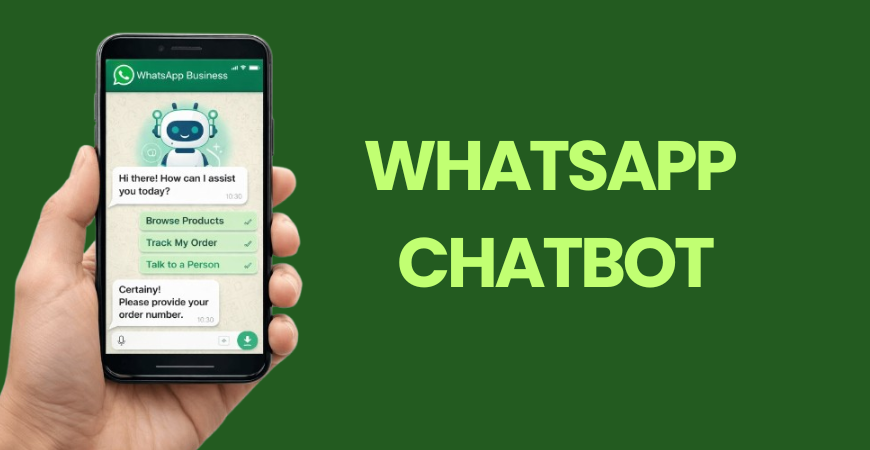
A WhatsApp chatbot is an automated communication system designed to interact with users through WhatsApp conversations. It can answer questions, provide information, collect customer details, and guide users toward specific actions.
Unlike traditional support systems that rely entirely on human representatives, chatbots can manage repetitive interactions automatically.
For example, a customer may ask:
“What are your service charges?”
Instead of waiting for a support executive, the chatbot can instantly provide:
- Pricing information
- Service details
- Available packages
- Booking options
- Consultation links
Modern chatbots are becoming increasingly sophisticated and can handle conversations in ways that feel more natural and contextual.
Rule-Based Chatbots vs AI Chatbots
| Feature | Rule-Based Chatbot | AI Chatbot |
| Responses | Predefined | Context-aware |
| Setup | Simple | More advanced |
| Personalization | Limited | Higher |
| Learning Ability | No | Yes |
| Best Use | FAQs | Complex interactions |
| Cost | Lower | Higher |
Rule-based systems work well for businesses dealing with predictable customer questions.
AI-powered systems, on the other hand, can understand intent, recognize patterns, and adapt responses more effectively.
Businesses exploring WhatsApp tools often begin with simpler chatbot solutions before gradually moving toward AI-enhanced customer support systems.
How Businesses Use WhatsApp Chatbots to Support Customers 24/7
Businesses across industries are adopting chatbots because repetitive communication consumes valuable operational resources.
Instead of answering the same questions hundreds of times each month, teams can automate these interactions and focus on conversations that require human expertise.
1. Answering Frequently Asked Questions
FAQ handling is perhaps the most common chatbot application.
Customers frequently ask questions such as:
- What are your prices?
- Are appointments available?
- What services do you provide?
- What are your business hours?
- How can I register?
A chatbot can respond instantly.
This enhances customer satisfaction while lessening the workload for support staff.
For educational institutions, frequently asked questions may revolve around:
- Course duration
- Certification details
- Fees
- Internship opportunities
- Demo sessions
For healthcare providers:
- Clinic timings
- Appointment availability
- Consultation costs
- Test reports
The ability to deliver information instantly often creates a smoother customer journey.
2. Lead Qualification
Not every inquiry requires immediate human interaction.
Businesses often receive messages from users who are simply gathering information.
A WhatsApp chatbot can ask qualifying questions such as:
- What service are you interested in?
- What budget range are you considering?
- Are you looking for immediate assistance?
- Which industry are you from?
This helps businesses categorize prospects more effectively.
Qualified leads can then be forwarded directly to the sales teams.
Companies implementing WhatsApp automation frequently use chatbots as the first stage of their lead nurturing process.
3. Appointment Bookings
Scheduling conversations manually can become chaotic as inquiries increase.
Chatbots simplify this process considerably.
They can:
- Share available slots
- Collect preferred dates
- Confirm appointments
- Send reminders
- Reduce no-shows
A coaching institute, for example, may allow prospective students to book demo classes automatically.
Clinics can streamline consultations.
Service providers can schedule meetings without constant manual coordination.
4. Order Updates
Customers often become anxious after placing orders.
They want updates regarding:
- Shipping status
- Dispatch information
- Delivery estimates
- Payment confirmations
A chatbot can provide these updates automatically.
Instead of contacting customer support repeatedly, users receive information immediately.
This significantly improves customer experience.
5. Customer Onboarding
Many businesses overlook onboarding.
Yet it plays an important role in retention.
After someone becomes a customer, a chatbot can:
- Send welcome messages
- Share educational resources
- Explain service features
- Offer tutorials
- Guide initial setup processes
Good onboarding reduces confusion and helps customers feel supported from the beginning.
6. Human Escalation
Automation should never completely replace human interaction.
Customers occasionally encounter issues requiring empathy, judgment, or customized solutions.
Strong chatbot systems know when to transfer conversations.
Examples include:
- Refund requests
- Complaints
- Technical issues
- High-value purchases
- Sensitive discussions
Businesses focusing on a comprehensive WhatsApp marketing strategy usually balance automation with accessible human support channels.
Example Workflow: A Customer Support Journey Using a Chatbot
Understanding chatbot implementation becomes easier through practical examples.
Imagine a digital training institute.
A prospective student discovers a course advertisement online and sends a message through WhatsApp.
The process may look like this:
Step 1: Initial Inquiry
User Message:
“I want details about your digital marketing course.”
Step 2: Instant Greeting
Chatbot Response:
“Hi! Thanks for reaching out. Are you interested in SEO, PPC, Social Media Marketing, or our complete program?”
Step 3: Information Collection
User selects:
“Complete Program”
Step 4: Automated Response
Chatbot shares:
- Course overview
- Duration
- Fee structure
- Certification information
- Placement assistance
Step 5: Qualification
Bot asks:
“Would you like to schedule a free counseling session?”
Step 6: Booking
Customer selects a preferred time slot.
Step 7: Human Follow-Up
Counselor receives the inquiry.
Conversation continues.
This process allows businesses to remain responsive even outside working hours.
Benefits of WhatsApp Chatbots
Businesses invest in chatbots because the advantages extend beyond convenience.
They influence efficiency, customer satisfaction, and long-term growth.
Faster Responses
Customers appreciate speed.
A chatbot replies instantly.
There is no waiting period.
This creates positive first impressions.
Continuous Availability
Traditional customer support ends when employees leave the office.
Chatbots continue working.
Weekends.
Public holidays.
Late evenings.
Customers can still receive assistance.
Reduced Workload
Support teams often spend significant time answering repetitive questions.
Automation handles these tasks.
Employees can focus on:
- Sales conversations
- Complex inquiries
- Customer retention
- Strategic activities
Consistent Communication
Humans occasionally provide inconsistent responses.
Chatbots deliver standardized information every time.
This reduces misunderstandings.
Better Customer Experience
People value convenience.
Immediate answers improve satisfaction.
Customers appreciate businesses that communicate efficiently.
Scalability
Handling fifty inquiries manually is manageable.
Handling five hundred inquiries daily becomes difficult.
Chatbots help businesses scale support without expanding support teams proportionally.
Many organizations using broader marketing automation tools have discovered that conversational systems contribute significantly to operational efficiency.
WhatsApp Chatbot vs Human Support
Businesses sometimes wonder whether chatbots will eventually replace support representatives.
The answer is no.
Chatbots complement human teams rather than eliminate them.
| Factor | WhatsApp Chatbot | Human Agent |
| Availability | 24/7 | Limited hours |
| Speed | Instant | Variable |
| Cost | Lower | Higher |
| Scalability | Excellent | Moderate |
| Emotional Intelligence | Limited | Strong |
| Complex Problems | Moderate | Excellent |
| Personalization | Moderate | High |
The ideal approach is combining both.
Chatbots handle repetitive interactions.
Human representatives address nuanced conversations.
This hybrid model often delivers the best customer experience.

Common Chatbot Mistakes Businesses Should Avoid
Not all chatbot implementations succeed.
Several mistakes can reduce effectiveness.
Trying to Automate Everything
Businesses sometimes overestimate chatbot capabilities.
Not every interaction should be automated.
Complex situations still require people.
Automation works best when it supports conversations rather than replaces them entirely.
Robotic Conversations
Messages that sound mechanical reduce trust.
People prefer conversational language.
Responses should feel helpful and natural.
For example:
Instead of:
“Your query has been registered successfully.”
Try:
“Thanks for reaching out. Here’s the information you’re looking for.”
The difference is subtle but important.
No Human Takeover
Customers should never feel trapped inside endless automated loops.
Businesses must provide clear pathways toward human assistance.
Options like:
“Talk to our team”
or
“Connect with an expert”
improve overall experience.
Overcomplicated Conversation Flows
Long decision trees often frustrate users.
Simplicity usually performs better.
Customers appreciate clear options.
Too many menus increase abandonment.
Ignoring Performance Metrics
Chatbots require ongoing optimization.
Businesses should monitor:
- Response rates
- Conversation completion rates
- Customer satisfaction
- Escalation frequency
- Conversion rates
Continuous improvement strengthens performance.
Frequently Asked Questions
Is a WhatsApp chatbot suitable for small businesses?
Yes. Small businesses often benefit greatly because chatbots help manage repetitive inquiries without requiring additional staff.
Does a chatbot replace customer support teams?
No. Chatbots support teams by handling routine interactions, while humans manage complex situations.
Are WhatsApp chatbots expensive?
Costs vary depending on features, conversation volume, and platform selection. Basic solutions are accessible even for smaller businesses.
Can chatbots improve lead generation?
Yes. Chatbots can qualify prospects, collect customer information, and direct leads toward appropriate sales channels.
How is a chatbot different from WhatsApp automation?
Chatbots are a component of broader automation systems. Businesses adopting WhatsApp automation often use chatbots for customer interactions, lead qualification, and support workflows.
Final Thoughts
A WhatsApp chatbot has evolved from being a technological novelty into a practical customer support solution that businesses can use to remain available around the clock. Customers increasingly expect immediate responses, and chatbots help businesses meet those expectations without increasing operational complexity.
The most successful implementations are rarely the most advanced. They are the ones designed around customer convenience, timely communication, and clear escalation paths. Businesses that combine automation with human interaction often create support experiences that feel efficient, helpful, and genuinely customer-focused.